A scholarship essay isn’t just another school assignment. It’s your one real chance to speak directly to the people deciding whether you get funding or not. Grades matter, sure. Test scores help. But the essay? That’s where decisions are often made.
The good news is this: winning scholarship essays aren’t magical or perfect. They’re clear, honest, and purposeful. Let’s break down how to write one that stands out — with real examples you can learn from.
Why Scholarship Essays Matter So Much
Scholarship committees read hundreds, sometimes thousands, of applications. Many applicants have similar grades and achievements. What separates winners from everyone else is story + clarity + alignment.
Your essay answers one big question:
Why should we invest in you?
If your essay doesn’t answer that clearly, even strong students get rejected.
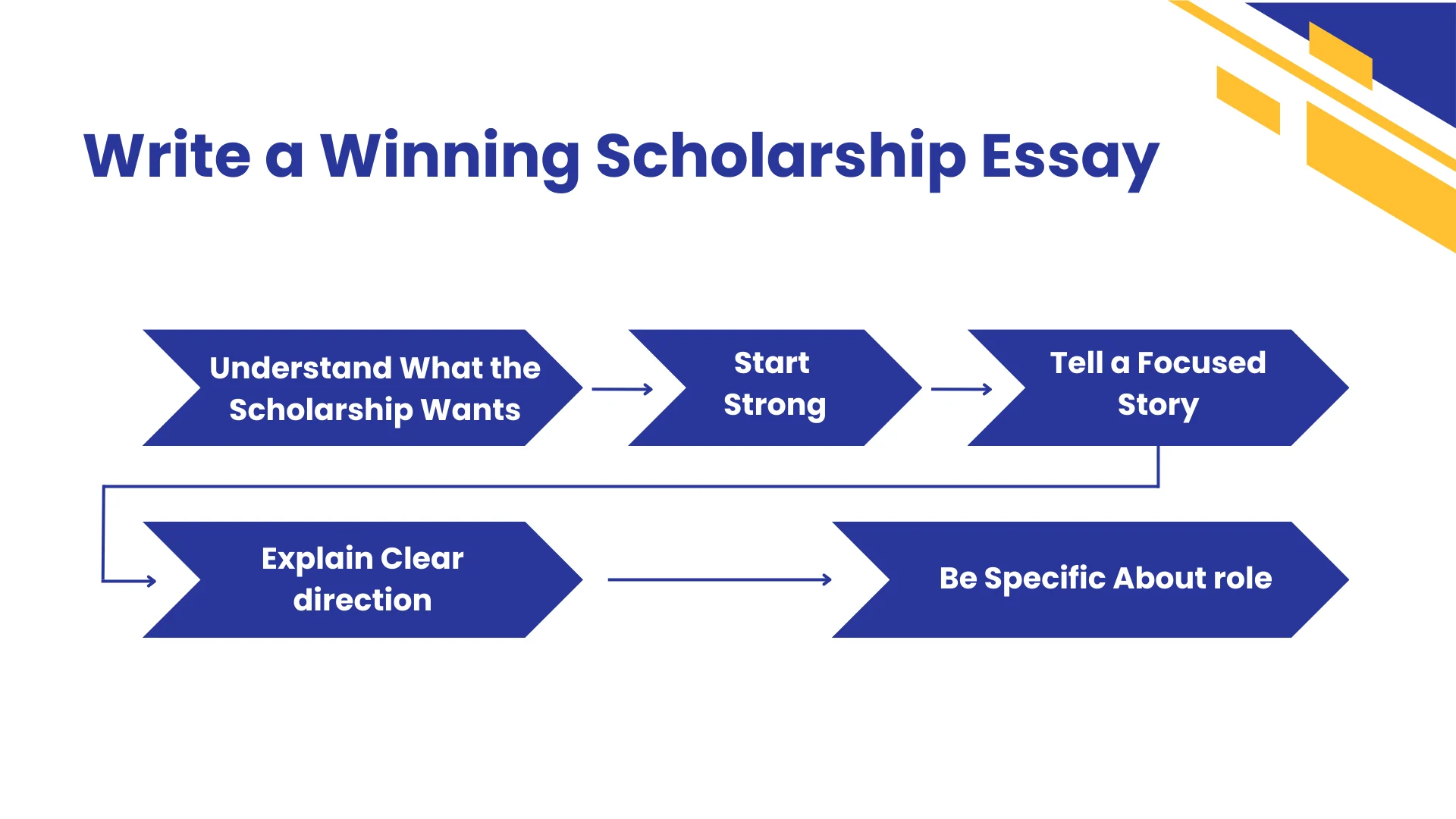
Step 1: Understand What the Scholarship Wants
Before you write a single sentence, read the scholarship description carefully.
Ask yourself:
- Is this scholarship focused on financial need, leadership, community service, academic excellence, or future impact?
- What values keep showing up in the description?
A common mistake is writing one generic essay and submitting it everywhere. That almost never works.
Example (What NOT to Do)
“I am hardworking and passionate about education.”
That tells them nothing. Every applicant says this.
Better Approach
If the scholarship is about community impact, your essay should clearly show how your education helps others — not just yourself.
Step 2: Start With a Strong, Human Opening
Your first paragraph decides whether the reader leans in or zones out. Skip clichés like:
- “Ever since I was a child…”
- “Education is the key to success…”
Real Example: Strong Opening
“At 6 a.m. every morning, I help my mother prepare food for the small stall that pays our rent. By 8 a.m., I’m in class, trying to focus on calculus while worrying about whether we’ll sell enough today.”
Why this works:
- It’s specific
- It feels real
- It immediately shows context and stakes
Step 3: Tell a Focused Story (Not Your Whole Life)
A winning essay usually focuses on one main experience, not everything you’ve ever done.
Choose a moment that shows:
- Growth
- Struggle
- Leadership
- Curiosity
- Impact
Real Example: Weak vs Strong
Weak
“I have faced many challenges in life and learned many lessons.”
Strong
“When my school lost its science teacher, our lab closed. Instead of giving up, I taught myself physics using free online resources and later helped classmates prepare for exams.”
The second version shows initiative and problem-solving without bragging.
Step 4: Connect Your Past to Your Future
Scholarship committees don’t just want your story. They want your direction.
You must clearly explain:
- What you want to study
- Why it matters
- How the scholarship helps you get there
Real Example
“Studying environmental engineering will allow me to design water systems for rural areas like my own, where clean water is still a daily struggle. This scholarship would remove the financial barrier that currently stands between me and that goal.”
This works because it links background → education → impact.
Step 5: Be Specific About the Scholarship’s Role
Never assume the committee knows why their scholarship matters.
Weak
“This scholarship will help me achieve my dreams.”
Strong
“Without this scholarship, I would need to work full-time alongside my studies, limiting my ability to participate in research and internships essential to my field.”
Specific = believable.
Step 6: Keep the Language Simple and Honest
You don’t need fancy words. In fact, overly complex language often hurts your essay.
Clear writing shows clear thinking.
Example
❌ “I endeavor to utilize my academic pursuits as a catalyst for societal advancement.”
✅ “I want to use my education to solve real problems in my community.”
Always choose clarity over complexity.
Step 7: End With Confidence, Not Desperation
Avoid sounding like you’re begging. Confidence shows readiness.
Strong Ending Example
“This scholarship would allow me to focus fully on my education and prepare for a future where I can give back meaningfully. I’m ready to make the most of this opportunity.”
Short, calm, and forward-looking.
Common Scholarship Essay Mistakes to Avoid
- Writing one essay for all scholarships
- Repeating your résumé instead of telling a story
- Being vague about goals
- Ignoring word limits
- Not proofreading (this alone ruins many great essays)
Final Checklist Before You Submit
✔ Does my essay clearly answer the prompt?
✔ Can someone understand my story without extra context?
✔ Did I explain why this scholarship matters?
✔ Is my writing clear and natural?
✔ Did I proofread carefully?
If you can say yes to all five, you’re in a strong position.
Final Thoughts
A winning scholarship essay isn’t about sounding impressive. It’s about being real, focused, and intentional. When your story, goals, and the scholarship’s purpose align, your chances rise dramatically.